GREAT PEOPLE IN THE WORLD
1.DR KWAME NKRUMAH
Ghana's Story
Ghana before Independence on March 6,1957 was called Gold Coast. The earliest Europeans to arrive here were the Portuguese in the 15th Century. On their arrival, they found so much gold between the River Ankobra and the Volta and subsequently named it “da Mina”, meaning The Mine. In 1482, the first castle was built in the Gold Coast by the Portuguese at Elmina. This was built to enhance their trading activities especially gold and slavery.
By 1598, the Dutch were in the Gold Coast to also trade. They built forts along the coastal areas notable among them being the Komenda fort. In 1637, they captured the Elmina castle from the Portuguese and that of Axim (Fort St. Anthony) in 1642.
Many other European traders came to the Gold Coast to trade. These included the British, Danes and Swedes. These European traders built several forts along our coastlines. In 1872, the Dutch lost interest in the coast and ceded their forts free to the British. Thus ended a period of Dutch occupation lasting 274 years. By 1874, the British were the only Europeans in the Gold Coast and thus made it a crown colony. This in effect gave them total control.
The British government established their headquarters at Cape Coast Castle. This had been their headquarters since 1662 and is one of the greatest historical sites in the country. It has numerous dungeons which were used to keep slaves before being transported to the Diaspora.
There had been many wars fought between the people of the Gold Coast and the British over governance. In 1874, an army under Sir Garnet Wolseley crossed the Pra River into the Asante territory. The Ghanaians referred to this War as the “Sagrenti War” because they could not pronounce Sir Garnet’s name correctly. The British force, this time proved too strong for the Asante who, after a long and brave fighting, agreed to sign a peace treaty at Fomena. At about the same time the British defeated the Anlo people in the Volta area. On the 12th of September, 1874, the whole of Southern Ghana including Anloland became a British colony. The Capital was removed from Cape Coast to Accra two years later.
After the Second World War (1939-1945), things began to change in the then Gold Coast. The discrimination against educated Ghanaians in the civil service was on the increase and high positions were reserved for whitemen while Ghanaians became hewers of wood and drawers of water. The European and Asian firms were also seriously exploiting the Africans. The Ex-servicemen (Ghanaian soldiers who fought in the World War), helped in another way to expose the weakness of the British. They realized that they performed better than the whites on the battlefield. These Ex-servicemen again saw the struggle for independence in India and Burma where most of them went to fight. They were therefore inspired to struggle against the same British in Ghana after the their return from the war.
The first political party was formed in August 1947 by Paa Grant, Dr. J.B Danquah and others. It was named the United Gold Coast Convention (U.G.C.C). Its slogan was “Self government within the shortest possible time”. The U.G.C.C. therefore invited Dr. Kwame Nkrumah home from his studies to become the full-time General Secretary of the Party. The U.G.C.C. had earlier on criticized the Burns Constitution of 1946 introduced by Sir Allan Burns who was governor by then.
In January 1948, Nii Kwabena Bonne III, a Ga Chief organized a general boycott of all European imports. A series of riots followed the boycott in early February, 1948. The last straw that broke the camel’s back was the famous February 28, 1948 incident. A batch of unarmed Ex-servicemen marched to the Christiansborg Castle on that day to submit a petition to the Governor about their poor conditions. Superintendent Imray, a white police officer, ordered the policemen at the castle to shoot. When the police refused to do so, Imray himself opened fire on the unarmed soldiers at the Christiansborg crossroad. Three of the leaders namely; Sergeant Adjetey, Private Odartey Lamptey and Corporal Attipoe fell dead. Thereafter, riots broke out in Accra. European and Asian stores were looted by the angry mob. The rioters forced open the Central Prison and set free its inmates.
After the riots, the Nationalist leaders in Ghana sent a strong worded cable to the Secretary of State in London. They blamed the Governor, Sir Gerald Creasy, greatly. They called him “Crazy Creasy” because he had failed to handle the problems facing the country. The Secretary of State however blamed the Nationalist leaders for being responsible for the disturbances in the country. Consequently, six of the leading nationalist were arrested and detained. They were popularly referred to as the BIG SIX. These leaders were Dr. J.B Danquah, Dr. Kwame Nkrumah, Obetsebi Lamptey, Akuffo Addo, William Ofori Atta and Ako Adjei.
The U.G.C.C. which awakened fervent national consciousness in the Gold Coast was what might be described as a liberal group with its slogan of “Self-government in the shortest possible time.” This attitude did not please Nkrumah who wanted “Self-government Now”.
Following disagreement of ideologies, Kwame Nkrumah left the U.G.C.C. and formed a more radical and nationalist party – Convention People’s Party (C.P.P) on June 12th, 1949 with its motto “self-government now”. He was joined by Kojo Botsio, K.A Gbedemah and others.
 On 9th January, 1950 the C.P.P organized a
nation-wide boycott and strike for workers and the masses. The people refused to
buy all British goods. Workers were warned not to cause any trouble. In the
cause of the riots however, two policemen were shot dead. On January 21st
1950, Nkrumah and other leading C.P.P members including Kojo Botsio and K.A.
Gbedemah were imprisoned at the James Fort Prison, Accra, on charges arising
from pursuing what was termed as “Positive Action” against the Government.
The imprisonment of Nkrumah made him a hero and martyr in the eyes of the
people.
On 9th January, 1950 the C.P.P organized a
nation-wide boycott and strike for workers and the masses. The people refused to
buy all British goods. Workers were warned not to cause any trouble. In the
cause of the riots however, two policemen were shot dead. On January 21st
1950, Nkrumah and other leading C.P.P members including Kojo Botsio and K.A.
Gbedemah were imprisoned at the James Fort Prison, Accra, on charges arising
from pursuing what was termed as “Positive Action” against the Government.
The imprisonment of Nkrumah made him a hero and martyr in the eyes of the
people.
In 1951, the pace was set for general elections. Dr Kwame Nkrumah was in prison when the elections were conducted. He overwhelmingly won the elections and was released by the then Governor, Sir Charles Noble Arden-Clark to head the new government. This however became the British Colony’s first African government. In March 1952, Kwame Nkrumah was designated Prime Minister. He was to appoint a cabinet, which was not to be responsible to the Governor but the Assembly.
Dr. Kwame Nkrumah in June 1953 submitted proposals for a new constitution. It was upon those that the April 1954 constitution was introduced making the country virtually self-governing. This new constitution provided for an All-African cabinet from an enlarged legislature. A general election followed in June 1954 from which the C.P.P won 79 out of the 104 seats of the National Assembly.
In 1956, another election was held in response to a pledge by the British Secretary of State for the colonies that if the newly elected legislature, by a reasonable majority, passed a resolution calling for independence; a firm date for the changeover would be announced. C.P.P won 71 out of the 104 contested seats. The British Mandated Togoland also held a plebiscite to join the Gold Coast.
This action opened the way for Ghana’s Independence and on 6th March, 1957, the curtain was drawn on the old order. The country emerged as the first country in Africa, South of the Sahara to regain independence from colonial rule. A new chapter was opened in the history of Ghana. On the eve of Ghana’s independence, Dr Kwame Nkrumah (then Prime Minister) proclaimed at the old Polo Grounds in Accra: “ At long last, the battle has ended and Ghana, our beloved country is free forever.” The nation however became a republic on 1st July, 1960 with Dr. Kwame Nkrumah becoming the first President.
KWAME NKRUMAH QUOTES
1A State in the grip of neo-colonialism is not master
of its own destiny. It is this factor which makes neo-colonialism such a
serious threat to world peace.
2.Freedom is not something that one people can bestow on another as a gift. Thy claim it as their own and none can keep it from them.
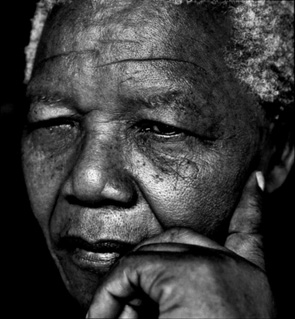
STORY ABOUT NELSON MANDELA
Nelson Mandela was born on July 18, 1918 in Transkei, South Africa. He
became actively involved in the anti-apartheid movement and joined the
African National Congress (ANC) in 1942. For 20 years, he directed a
campaign of peaceful, non-violent defiance against the South African
government and its racist policies. In 1994 he was inaugurated as the
country's first black president.
Early Life
Born Rolihlahla Mandela on July 18, 1918 in Transkei, South Africa, in the tiny village of Mvezo on the banks of the Mbashe River in the province of Transkei. "Rolihlahla" in the language of Xhosa literally means "pulling the branch of a tree," but more commonly means "troublemaker."Mandela's father was destined to be a chief and for years served as a counselor to tribal chiefs. But over a dispute with the local colonial magistrate, he lost his title and his fortune. Rolihlahla was only an infant at the time and the loss of status forced his mother to move the family to Qunu, an even smaller village north of Mvezo. The village was nestled in a narrow grassy valley. There were no roads, only foot paths that linked the pastures where livestock grazed. The family lived in huts and ate a local harvest of maize, sorghum, pumpkin, and beans, which was all the family could afford. Water came from springs and streams and cooking was done outdoors. Nelson played the games of young boys, acting out male rights-of -passage scenarios with toys he made himself from the natural materials available, tree branches and clay.
At the suggestion of one of Rolihlahla's father's friends, he was baptized into the Methodist church and became the first in his family to attend school. As was the custom at the time, and probably due to the bias of the British educational system in South Africa, his teacher told him that his new first name would be "Nelson."
Nelson Mandela's father died of lung disease when Nelson was 9 years old. From that point, his life changed dramatically. He was adopted by Chief Jongintaba Dalindyebo, the acting regent of the Thembu people. This gesture was done as a favor to Nelson's father who, years earlier, had recommended Jongintaba be made chief. Nelson left the carefree life he knew in Qunu, fearing he would never see is village again. He traveled by motorcar to Mqhekezweni, the provincial capital of Thembuland, to the chief's royal residence. Though he had not forgotten his beloved village of Qunu, he quickly adopted to the new, more sophisticated surroundings of Mqhekezweni.
Mandela was given the same status and responsibilities as the regent's two other children, son Justice, the oldest and Nomafu, the regent's daughter. Mandela took classes in a one-room school next to the palace, studying English, Xhosa, history, and geography. It was during this period that Mandela developed his interest in African history from elder chiefs who came to the Great Palace on official business. He heard of how the African people had lived in relative peace until the coming of the white people. Before then, the elders said, the children of southern Africa lived as brothers, but the white man shattered this fellowship. The black man shared the land, the air, and the water with the white man, but the white man took all this for himself.
When Mandela was 16, it was time for him to partake in the circumcision ritual that would carry him into manhood. The ceremony of circumcision was not just a surgical procedure, but an elaborate ritual in preparation for manhood. In the African tradition, an uncircumcised male could not inherit his father's wealth, marry or officiate at tribal rituals. Mandela participated in the ceremony with 25 other boys. He welcomed the opportunity to partake in his people's customs and felt ready to make the transition from boyhood to manhood. But during the proceedings, Chief Meligqili, the main speaker at the ceremony, spoke sadly of the young men as a generation enslaved in their own country. Because their land was under the control of the white man.
, they would never have the power to govern themselves. The chief
went on to lament that the promise of the young men would be squandered
as they struggled to make a living and perform mindless chores for the
white man. Mandela would later say that that the chief's words didn't
make total sense to him at the time, but they would work on him and
would eventually formulate his resolve for an independent South Africa.
From the time Mandela came under the guardianship of the Regent Jongintaba,
Contents
he was groomed to assume high office, though not as a chief,
but as a counselor to one. As Thembu royalty, Nelson attended Wesleyan
mission school, Clarkebury Boarding Institute and Wesleyan College.
There he found interest and success in his academic studies through
"plain hard work." He also excelled in track and later boxing. At first,
he is mocked as a "country boy," but eventually makes friends with
several classmates, including Mathona, his first female friend.
In 1939, Nelson Mandela enrolled at the University College of Fort
Hare, the only residential center of higher learning for blacks in South
Africa. Fort Hare was considered Africa's equivalent of Oxford or
Harvard, drawing scholars from all parts of sub-Sahara Africa. In his
first year, Mandela took the required courses, but focused on Roman
Dutch law to prepare for a career in civil service as an interpreter or
clerk, the best profession a black man could obtain.
In his second year, he was elected to the Student Representative
Council (SRC). For some time students had been dissatisfied with the
food and lack of power held by the SRC. During this election, a majority
of students voted to boycott unless their demands were met. Mandela
aligned with the majority of the students and resigned his position.
Seeing this as an act of insubordination, the university's Dr. Kerr
expelled Mandela for the rest of the year, telling him he could come
back when he agreed to serve on the SRC. When Mandela returned home, the
regent was furious and told him unequivocally he would recant his
decision and go back to school in the fall.
Mandela's Imprisonment
A few weeks after Mandela arrival at home, Regent Jongintaba announced he had arranged a marriage for him. The regent was within his right as tribal custom dictated and wanted to make sure Mandela's life was set during the regent's lifetime. Mandela was shocked and felt trapped. Believing he had no other option, he ran away to Johannesburg, where he worked in a variety of jobs, including guard and clerk, while completing his bachelor's degree via correspondence courses. He then enrolled at the University of Witwatersrand to study law. He became actively involved in the anti-apartheid movement and joined the African National Congress (ANC) in 1942.Within the ANC, a small group of young Africans banded together calling themselves the African National Congress Youth League. Their goal was to transform the ANC into a mass grassroots movement, deriving strength from millions of rural peasants and working people who had no voice under the current regime. Specifically, the group believed that the ANC's old tactics of polite petitioning were ineffective. In 1949, the ANC officially adopted the Youth League's methods of boycott, strike, civil disobedience and non-cooperation with policy goals of full citizenship, redistribution of land, trade union rights, and free and compulsory education for all children.
For 20 years, Mandela directed a campaign of peaceful, non-violent defiance against the South African government and its racist policies, including the 1952 Defiance Campaign and the 1955 Congress of the People. He founded the law firm Mandela and Tambo, partnering with Oliver Tambo, a brilliant student he had earlier met at Fort Hare. The law firm provided free and low-cost legal counsel to unrepresented blacks.
In 1956, Mandela and 150 others were arrested and
charged with treason for their political advocacy, though they were
eventually acquitted. Meanwhile, the ANC was being challenged by the
Africanists, a new breed of Black activists who believed that the
pacifist method of the ANC was ineffective. By 1959, the ANC lost much
of its militant support when the Africanists broke away to form the
Pan-Africanist Congress.
In 1961, Mandela, who was formerly committed to non-violent protest,
Contents
began to believe that armed struggle was the only way to
achieve change. He co-founded Umkhonto we Sizwe, also known as MK, an
armed offshoot of the ANC dedicated to sabotage and guerilla war tactics
to end apartheid. He orchestrated a three-day national workers strike
in 1961 for which he was arrested in 1962. He was sentenced to five
years in prison for the strike, and then brought to trial again in 1963.
This time, he and 10 other ANC leaders were sentenced to life
imprisonment for political offenses, including sabotage.
Nelson Mandela was imprisoned on Robben Island for 18 of his 27
years in prison. As a black political prisoner, he received the lowest
level of treatment. However, he was able to earn a Bachelor of Law
degree through a University of London correspondence program while
incarcerated. A 1981 memoir by South African intelligence agent Gordon
Winter described a plot by the South African government to arrange for
Mandela's escape so as to shoot him during the recapture. The plot, was
foiled by British intelligence, Mandela continued to be such a potent
symbol of black resistance that a coordinated international campaign for
his release was launched. This international groundswell of support
exemplified the power and esteem Mandela had in the global political
community.
In 1982, Mandela and other ANC leaders were moved to Pollsmoor
Prison, allegedly to enable contact between them and the South African
government. In 1985, President
P.W. Botha
offered Mandela's release in exchange for renouncing armed struggle;
the prisoner flatly rejected the offer. With increasing local and
international pressure for his release, the government participated in
several talks with Mandela over the years, but no deal was made. It
wasn't until Botha suffered a stroke and was replaced by Frederik Willem
de Klerk that Mandela's release was announced in February 1990. De
Klerk unbanned the ANC, removed restrictions on political groups, and
suspended executions.
Prison Release and Presidency
Upon his release, Mandela immediately urged foreign powers not to reduce their pressure on the South African government for constitutional reform. While he stated his commitment to work toward peace, he declared that the ANC's armed struggle would continue until the black majority received the right to vote.Mandela was elected president of the African National Congress in 1991 with lifelong friend and colleague, Oliver Tambo, serving as National Chairperson. Mandela continued to negotiate with President F.W. de Klerk toward the country's first multi-racial elections. White South Africans were willing to share power, but many black South Africans wanted a complete transfer of power. The negotiations were often strained and news of violent eruptions, including the assassination of ANC leader Chris Hani, continued throughout the country. Mandela had to keep a delicate balance of political pressure and intense negotiations amid the demonstrations and armed resistance.
Negotiation prevailed, however, and on April 27, 1994, South Africa held its first democratic elections. At age 77, Nelson Mandela was inaugurated as the country's first black president on May 10, 1994, with de Klerk as his first deputy. In 1993, Mandela shared the Nobel Prize for Peace with de Klerk for their work towards dismantling apartheid and in 1995 he was awarded the Order of Merit. In 1994, Mandela published his autobiography, Long Walk to Freedom, much of
which he had secretly written while in prison.
From 1994 until June 1999, Mandela worked to bring about the
transition from minority rule and apartheid to black majority rule. He
used the nation's enthusiasm for sports as a pivot point to promote
reconciliation between whites and blacks, encouraging black South
Africans to support the once hated South African national rugby team. In
1995, South Africa came on the world stage by hosting the Rugby World
Cup,
Contents
which brought further recognition and prestige to the young republic.
During his presidency, Mandela also worked to protect South
Africa's economy from collapse and was officially launched South
Africa's government. Through his Reconstruction and Development Plan, he
had the government funding the creation of jobs, housing, and basic
health care. In 1996, he signed into law the new South African
constitution, which established a strong central government based on
majority rule and guaranteed rights of minorities and freedom of
expression.
Retirement and Later Career
Mandela retired from active politics at the 1999 general election but maintained a busy schedule, raising money for his Mandela Foundation to build schools and clinics in South Africa's rural heartland and serving as a mediator in Burundi's civil war. He also published a number of books on his life and struggle, among them, No Easy Walk to Freedom, Nelson Mandela: The Struggle is my Life, and Nelson Mandela's Favorite African Folktales. He was diagnosed and treated for prostate cancer in 2001 and in June 2004, at age 85, he announced his formal retirement from public life and returned to his native village of Qunu.On July 18, 2007, Mandela convened a group of world leaders, including Graca Machel, Desmond Tutu, Kofi Annan, Ela Bhatt, Gro Harlem Brundtland, Jimmy Carter, Li Zhaoxing, Mary Robinson and Muhammad Yunus to address the world's toughest issues. Named "The Elders," the group is committed to working publicly and privately to find solutions to problems around the globe. Since its inception, "The Elders" has made an impact in Asia, the Middle East, and Africa promoting peace, women's equality, demanding an end to atrocities, and supporting initiatives to address humanitarian crises and promote democracy. Mandela is also committed to the fight against AIDS, a disease that killed his son, Makgatho Mandela, in 2005.
Mandela was married three times: to Evelyn Ntoko Mase from until 1944-1957, they had four children; to Winnie Madikizela-Mandela (1958-1996), they had two daughters; and to Graça Machel in 1998.
QUOTES OF NELSON MANDELA
1.For to be free is not merely to cast off one's chains, but to live in a way that respects and enhances the freedom of others.
2.I am not a saint, unless you think of a saint as a sinner who keeps on trying.
3.There is nothing like returning to a place that remains unchanged to find the ways in which you yourself have altered.
4.“Education is the most powerful weapon which you can use to change the world.”
5. “I learned that courage was not the absence of fear, but the triumph over it. The brave man is not he who does not feel afraid, but he who conquers that fear.
6.A good head and good heart are always a formidable combination. But when you add to that a literate tongue or pen, then you have something very special.”
7.“I am fundamentally an optimist. Whether that comes from nature or nurture, I cannot say. Part of being optimistic is keeping one's head pointed toward the sun, one's feet moving forward. There were many dark moments when my faith in humanity was sorely tested, but I would not and could not give myself up to despair. That way lays defeat and death.”
8.“It always seems impossible until it's done.”
9.“For to be free is not merely to cast off one's chains, but to live in a way that respects and enhances the freedom of others.”
10.“There is nothing like returning to a place that remains unchanged to find the ways in which you yourself have altered.”
3.MORGAN FREEMAN